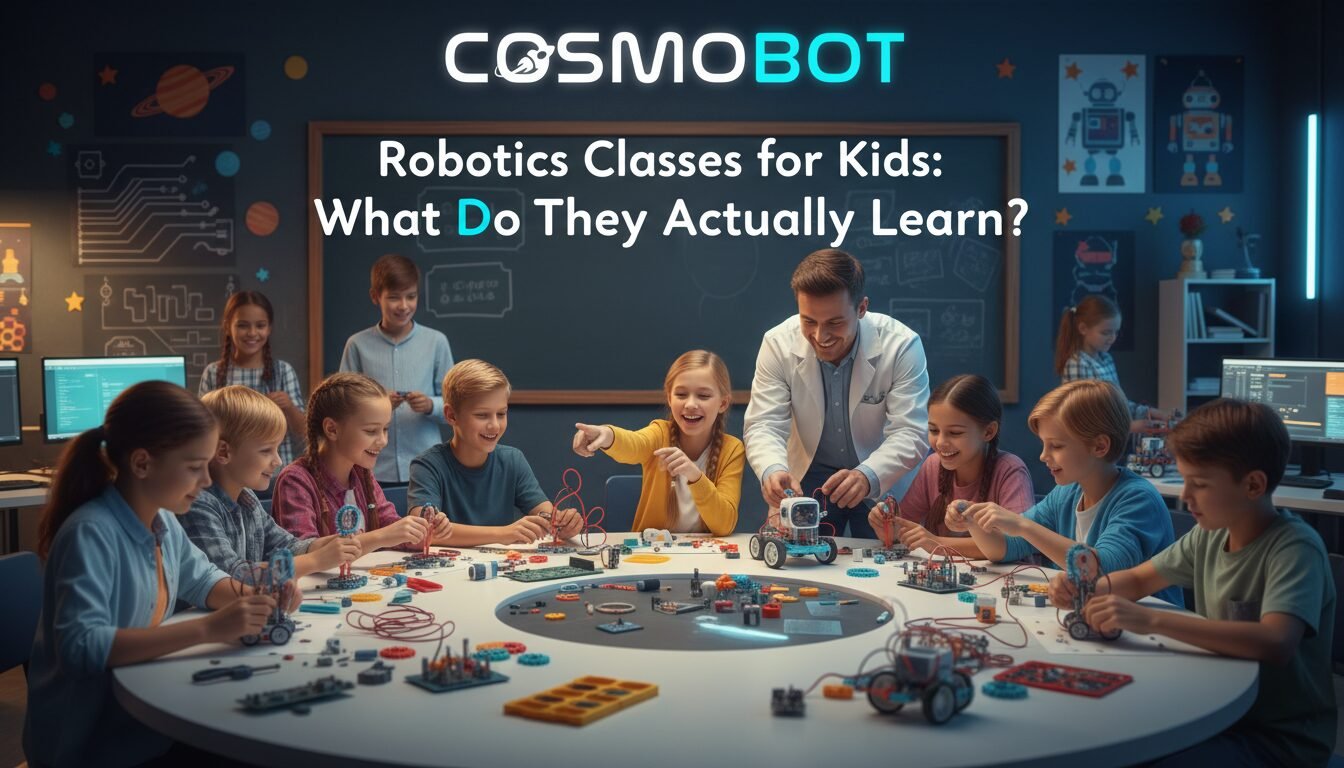
Robotics Classes for Kids: What Do They Actually Learn?
In today’s fast-moving digital world, parents are constantly searching for meaningful learning opportunities that prepare their children for the future. Among the most in-demand skills, Robotics stands out as a powerful combination of creativity, problem-solving, and hands-on learning.
At Cosmobot, robotics is more than just assembling parts — it is a structured learning journey that helps children develop real-world skills while having fun. But what exactly do kids learn in robotics classes? Let’s explore.
1. Understanding the Basics of Robotics
Every robotics class begins with helping kids understand what a robot is and how it works. Children learn:
- The role of sensors, motors, and controllers
- The difference between manual and autonomous robots
- Basic engineering concepts
- How machines respond to instructions
This foundational knowledge helps kids build confidence before moving to advanced tasks.
2. Hands-On STEM Learning
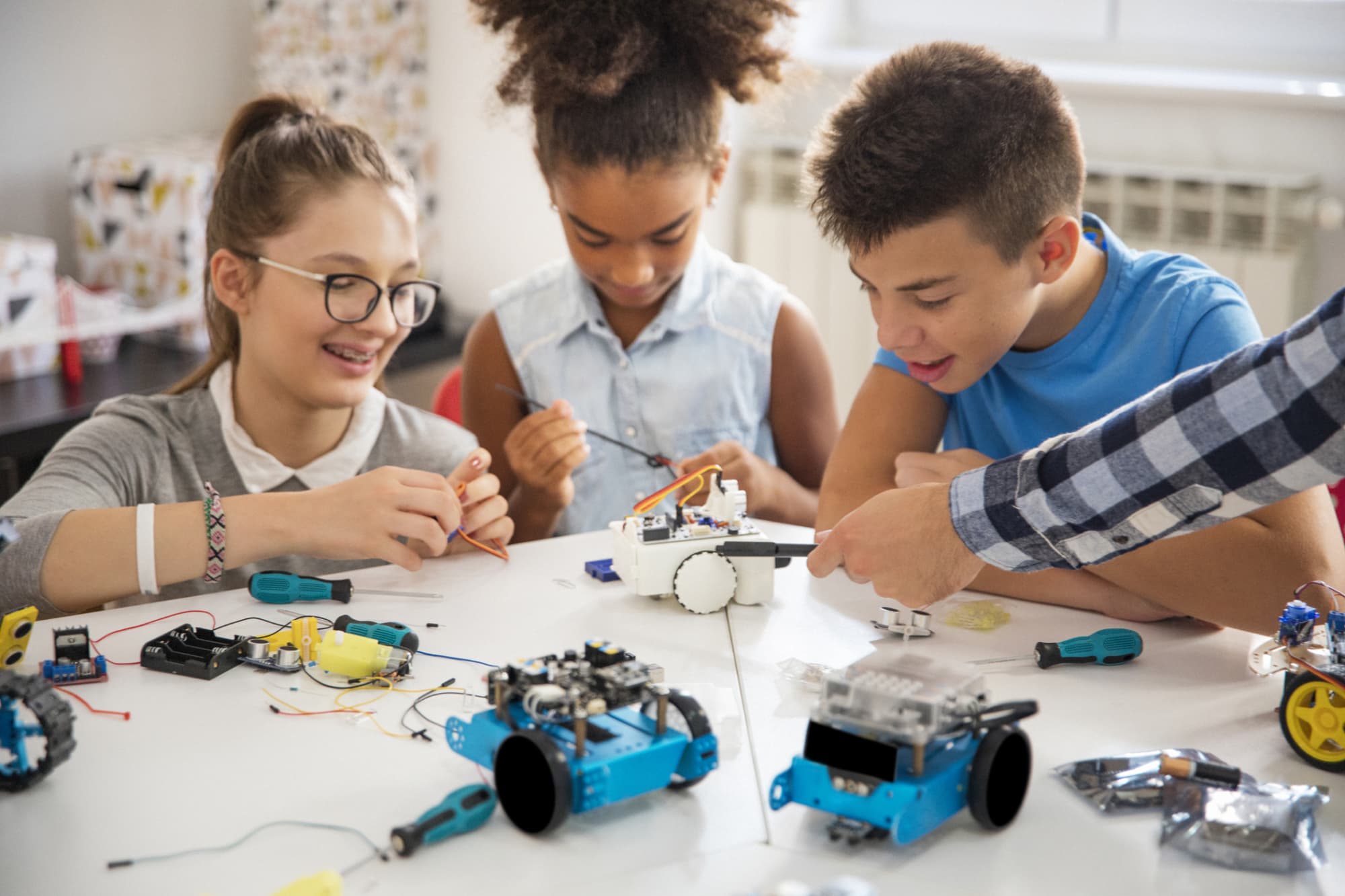

Robotics integrates Science, Technology, Engineering, and Mathematics (STEM) into practical, enjoyable activities. Instead of memorizing theories, kids experience STEM concepts in real time.
They learn:
- Basic physics (motion, speed, balance)
- Engineering design principles
- Logical thinking & structured planning
- Real-world problem-solving
This method makes STEM subjects easier to understand and far more engaging.
3. Introduction to Coding and Programming
One of the biggest advantages of robotics classes is early exposure to coding. Kids learn:
- Block-based programming languages like Scratch
- How to give step-by-step commands
- How robots follow algorithms
- Debugging — finding and fixing errors
- Basic automation concepts
By coding their robots to move, turn, detect objects or light, children naturally develop computational thinking skills.
4. Creative Design & Innovation
Robotics is not only technical — it’s highly creative. Kids get opportunities to design, build, and customize their robots. They learn:
- Creative problem-solving
- Designing structures and models
- Using imagination to create new robot functions
- Out-of-the-box thinking
This blend of creativity and technology strengthens both the left and right side of the brain.
5. Teamwork and Collaboration


Most robotics tasks at Cosmobot are team-based, which helps children develop essential social skills. They learn to:
- Share ideas
- Divide tasks
- Support peers
- Work toward a common goal
- Communicate effectively
These are skills that will benefit them throughout life, not just in academics.
6. Building Logical and Analytical Thinking
Robotics encourages children to think critically. Every problem requires a structured solution, and every solution requires testing. Through this process, kids learn:
- Step-by-step problem solving
- Identifying errors and correcting them
- Analyzing patterns
- Improving their robot’s performance
This enhances patience, focus, and the ability to think logically under pressure.
7. Real-World Applications of Robotics
Kids also learn how robotics is shaping the future. They explore:
- How robots work in industries
- Robots in healthcare, space, and home automation
- The role of AI and automation
- Future career paths in robotics, engineering & tech
This exposure inspires long-term interest and helps them dream bigger.
8. Confidence, Leadership & Future Skills
Robotics classes naturally build confidence because children see their ideas come to life. They gain:
- Leadership skills during group activities
- Confidence in presenting their projects
- A sense of achievement
- Motivation to learn more complex concepts
This early success strengthens their academic and personal growth journey.
Why Robotics Classes at Cosmobot Are Different
At Cosmobot, we follow a structured approach designed specifically for young learners. Our programs offer:
- Certified STEM-based curriculum
- Practical, hands-on learning
- Safe and supervised sessions
- Age-appropriate robotics kits
- Experienced instructors
- A learning environment that encourages curiosity
Our mission is simple — to shape young innovators and prepare them for a technology-driven future.
Final Thoughts
Robotics classes are not just an extracurricular hobby — they are an investment in your child’s future. From creativity to coding, teamwork to technology, robotics empowers kids with skills that will stay with them for a lifetime.
Cosmobot ensures that every child learns, explores, and grows through an engaging, practical, and futuristic learning journey.