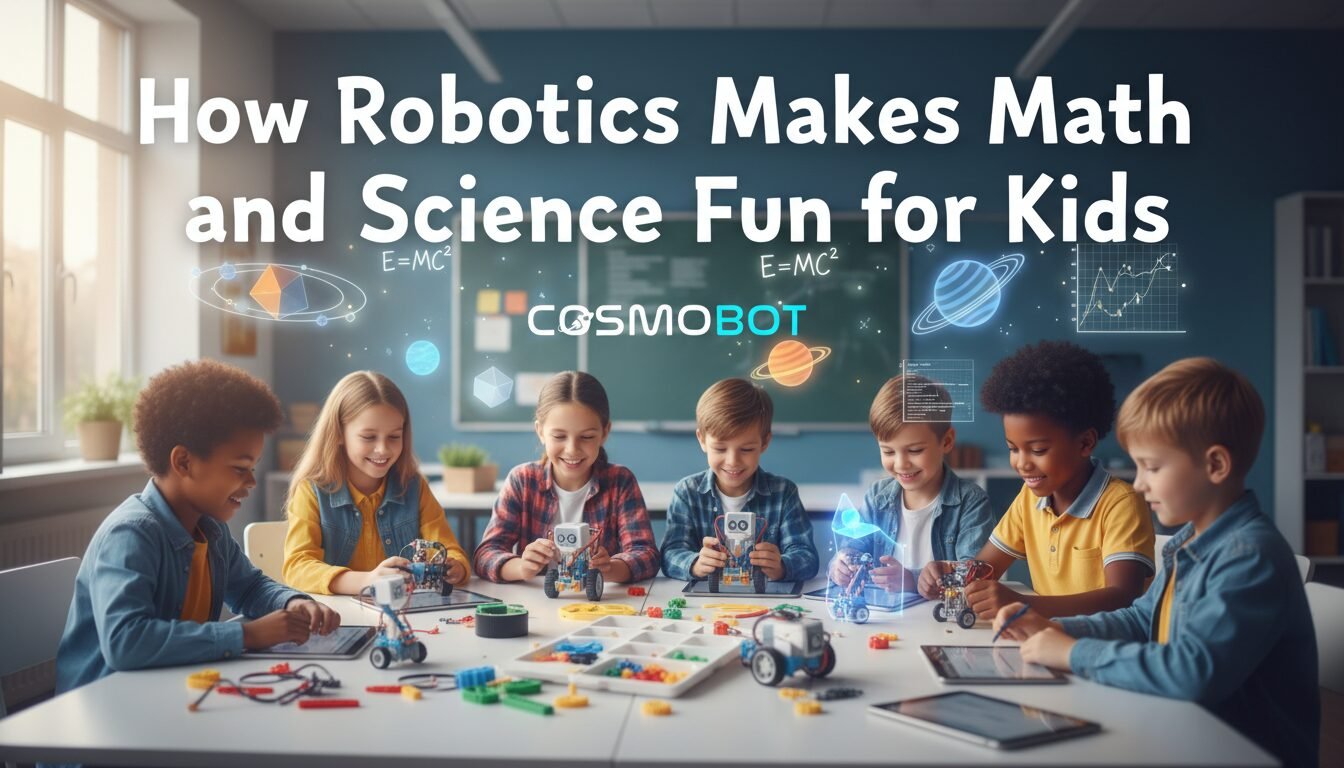
How Robotics Makes Math and Science Fun for Kids
For many children, math and science often feel difficult or boring. Long formulas, complex theories, and textbook-heavy lessons can sometimes reduce curiosity instead of encouraging it. But what if learning math and science could feel like building a robot, programming movements, or solving exciting challenges?
That is exactly where robotics changes everything.
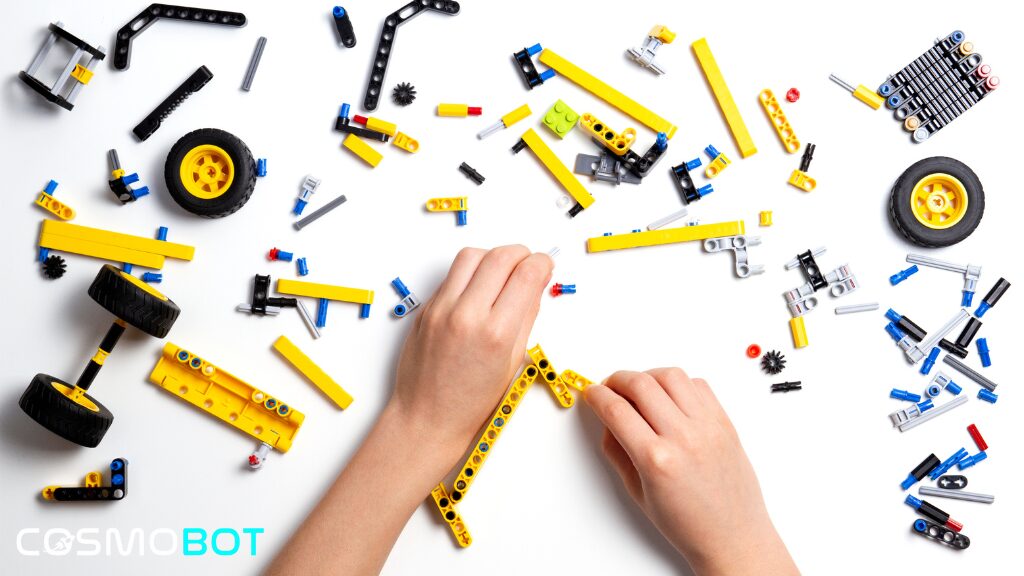
Robotics transforms abstract concepts into hands-on experiences. Instead of memorising formulas, children apply them. Instead of reading theories, they experiment with them. At Cosmobot, we help children discover that math and science are not just subjects — they are tools to create, innovate, and solve real-world problems.
Let’s explore how robotics makes math and science fun, practical, and engaging for kids.
1. Turning Math into Real-World Action
Many children struggle with math because they cannot see where it is used in real life. Robotics makes math visible and meaningful.
When kids build and program robots, they use:
- Measurements and calculations
- Angles and geometry
- Speed and distance formulas
- Logical sequencing
For example, if a robot needs to turn 90 degrees, children apply geometry concepts. If it must move a certain distance, they calculate timing and motor rotation.
Instead of asking, “Why do we need this formula?” children start saying, “Let’s use this formula to make it work!”
That shift in mindset makes math exciting.
2. Making Science Practical and Interactive
Science becomes powerful when children can see it in action.
Robotics introduces key science concepts such as:
- Force and motion
- Energy transfer
- Friction
- Sensors and light detection
- Circuits and electricity
When students build robots using motors and sensors, they directly observe scientific principles at work.
At Cosmobot, children don’t just read about electricity — they connect circuits. They don’t just study motion — they program it.
This hands-on experience strengthens understanding and long-term memory.
3. Encouraging Problem-Solving and Critical Thinking
Robotics challenges children to think critically.
If a robot doesn’t move correctly, they must figure out:
- Is the code wrong?
- Is the sensor misaligned?
- Is the motor connection loose?
This develops strong analytical thinking skills. Instead of depending on memorisation, children learn how to troubleshoot and solve problems independently.
Math and science become tools for solving challenges rather than subjects to fear.
4. Removing Fear of Difficult Subjects
Many children develop anxiety around math and science due to exam pressure.
Robotics reduces this fear by:
- Making learning playful
- Encouraging experimentation
- Allowing safe mistakes
- Focusing on understanding instead of memorisation
When children enjoy learning, confidence grows naturally.
Confidence leads to better academic performance.
5. Building Strong STEM Foundations
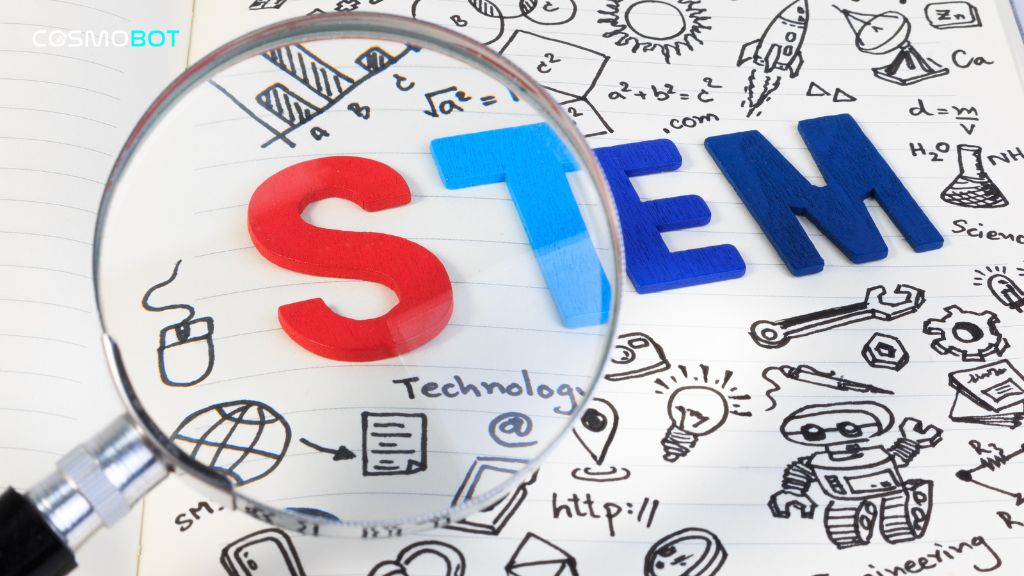
Robotics combines STEM learning (Science, Technology, Engineering, Mathematics) in a practical format.
Through robotics education, children develop:
- Logical reasoning
- Engineering thinking
- Computational skills
- Technical creativity
This integrated learning approach ensures stronger fundamentals in math and science.
At Cosmobot, we focus on building this foundation early so children are prepared for advanced subjects in higher grades.
6. Increasing Curiosity and Innovation
Robotics encourages children to ask questions:
- What happens if I change this command?
- How can I make the robot faster?
- Can I design a new structure?
Curiosity is the foundation of scientific thinking.
When children experiment with robotics projects, they naturally explore math and science concepts without feeling pressured.
7. Improving Academic Performance
Practical learning improves retention.
When children understand concepts through robotics:
- Their maths calculations improve
- Science concepts become clearer
- Logical thinking becomes stronger
- Focus and attention increase
Many parents notice improvement in school performance after their child joins robotics programs.
8. Preparing for the Future
The world is rapidly moving towards automation, artificial intelligence, and robotics-driven industries.
By learning robotics early, children:
- Become comfortable with technology
- Develop digital literacy
- Gain problem-solving confidence
- Explore potential career paths
Robotics helps bridge the gap between school education and future career skills.
Why Choose Cosmobot for Robotics Learning in Siliguri?
Cosmobot offers structured robotics and STEM programs designed specifically for young learners.
Our approach includes:
✔ Hands-on project-based learning
✔ Coding and automation fundamentals
✔ Age-appropriate curriculum
✔ Interactive classroom sessions
✔ Focus on real understanding, not rote learning
We aim to transform math and science from “difficult subjects” into exciting experiences.
Parents in Siliguri trust Cosmobot because we prioritize practical learning and future-ready skill development.
When Should Children Start Robotics?
Children can begin robotics learning as early as 6–7 years old with beginner-friendly modules.
Starting early helps them:
- Develop confidence
- Build strong foundations
- Cultivate curiosity
- Improve logical reasoning
The earlier children connect math and science to real-world applications, the stronger their understanding becomes.
Final Thoughts
Math and science don’t have to be boring or intimidating. With robotics, these subjects become interactive, engaging, and meaningful.
Robotics turns equations into motion, theories into experiments, and challenges into achievements.
At Cosmobot, we believe every child has the potential to become an innovator. By making math and science fun through robotics, we help children unlock that potential.
If you want your child to enjoy learning while building future-ready skills, robotics is the perfect place to start.