1. Introduction
The Role of Robotics in Future Career Opportunities let’s find out: The world is changing faster than ever. From self-driving cars to automated factories and smart hospitals, robotics is reshaping almost every industry. As technology evolves, today’s children are stepping into a future where understanding robots won’t be optional—it will be essential.
This is why robotics education has become one of the most powerful tools for preparing young minds for tomorrow’s career landscape. Through robotics, children learn problem-solving, creativity, logic, teamwork, and technical skills that will shape their future careers.
At Cosmobot, we believe that introducing robotics early not only builds confidence but also gives children an edge in future job opportunities across engineering, healthcare, space science, IT, and more. This article explores how robotics is transforming career prospects and why children should start learning robotics today.
2. Why Robotics Matters Today
Robotics is no longer limited to sci-fi movies or high-tech labs. It has evolved into a mainstream technology used in:
- Manufacturing
- Healthcare
- Education
- Agriculture
- Defense
- Logistics and Transportation
- Space research
- Smart homes
- Retail and automation
Globally, companies are hiring candidates who understand automation, AI, and robotics—even at the beginner level. This is why developing robotics skills early gives children a lifetime advantage.
3. Critical Skills Children Learn Through Robotics
Robotics education is not just about building machines; it builds future-proof skills that are highly valued in modern careers:
3.1 Problem-Solving
Children learn how to break down challenges into steps, test solutions, and improve designs—just like real engineers.
3.2 Logical & Computational Thinking
Coding robots helps children understand logic, sequences, conditions, and algorithms—skills used in software development, AI, and automation.
3.3 Creativity & Innovation
Robotics encourages kids to think beyond textbooks. They build something real—vehicles, bots, sensors, machines—that spark imagination and creativity.
3.4 Teamwork & Leadership
Many robotics challenges require collaboration. Children learn communication, planning, role-sharing, and leadership.
3.5 Confidence & Presentation Skills
Every robotics project teaches kids how to explain ideas, present solutions, and take pride in what they’ve built.
These are not just academic skills—they are the skills employers look for in the future workforce.
4. Robotics and Future Career Opportunities
Robotics is opening doors to high-demand, high-salary careers. Let’s explore some of the fastest-growing career paths for the next generation:
4.1 Robotics Engineering
Designing, building, and programming robots for industries like healthcare, defense, and manufacturing.
4.2 Artificial Intelligence (AI) & Machine Learning
AI engineers work with algorithms that help machines “think” and make decisions—used in robotics, data science, and automation.
4.3 Automation Engineer
Responsible for designing automated systems used in factories, warehouses, and smart homes.
4.4 Software & App Development
Coding robots forms a strong foundation for becoming a professional software developer.
4.5 Aerospace & Space Robotics
Space agencies like ISRO, NASA, and ESA use robots for exploration, satellites, and missions.
4.6 Medical Technology & Surgical Robotics
Robotic-assisted surgeries and AI-driven devices are becoming common in modern hospitals.
4.7 Drone Technology & Operations
Drones are widely used in photography, agriculture, surveillance, logistics, and rescue operations.
4.8 IoT (Internet of Things) Specialists
Smart devices—from home appliances to industrial sensors—run on robotics and automation.
4.9 Data Science & Analytics
Robotics helps children develop analytical and logical skills essential for data-driven careers.
4.10 Entrepreneurship & Innovation
Young innovators build startups in robotics kits, devices, apps, and automation solutions.
The future will be built by those who understand robotics—and the demand will only grow.
5. Why Kids Should Start Learning Robotics Early
Starting robotics early helps children build the right foundation for future technology careers. Early exposure means:
- Better understanding of complex concepts
- Stronger creativity and innovation
- Faster learning of coding and logic
- Better academic performance in STEM subjects
- Increased curiosity for engineering and science
- Higher confidence when dealing with technology
Early learning = Lifelong advantage.
6. The Role of Robotics in the Indian Education System
India is rapidly adopting robotics and STEM education. From NEP (New Education Policy) recommendations to Atal Tinkering Labs, schools nationwide are introducing robotics as a core subject.
However, most schools still lack trained mentors, advanced kits, and structured programs. This is where specialized learning centers like Cosmobot play a vital role by offering hands-on robotics experiences that complement school learning.
7. How Cosmobot Prepares Students for Future Careers
At Cosmobot, robotics is taught through an immersive, project-based approach. Every child learns by building, experimenting, coding, and creating real machines.
7.1 Age-Wise Programs
We offer robotics courses designed for:
- Ages 6–9 → Basic robotics & imagination
- Ages 10–13 → Coding + mechanics + sensors
- Ages 14–16 → Advanced robotics, automation & IoT
7.2 Hands-On Learning
Kids learn through:
- Sensors
- Motors
- Microcontrollers
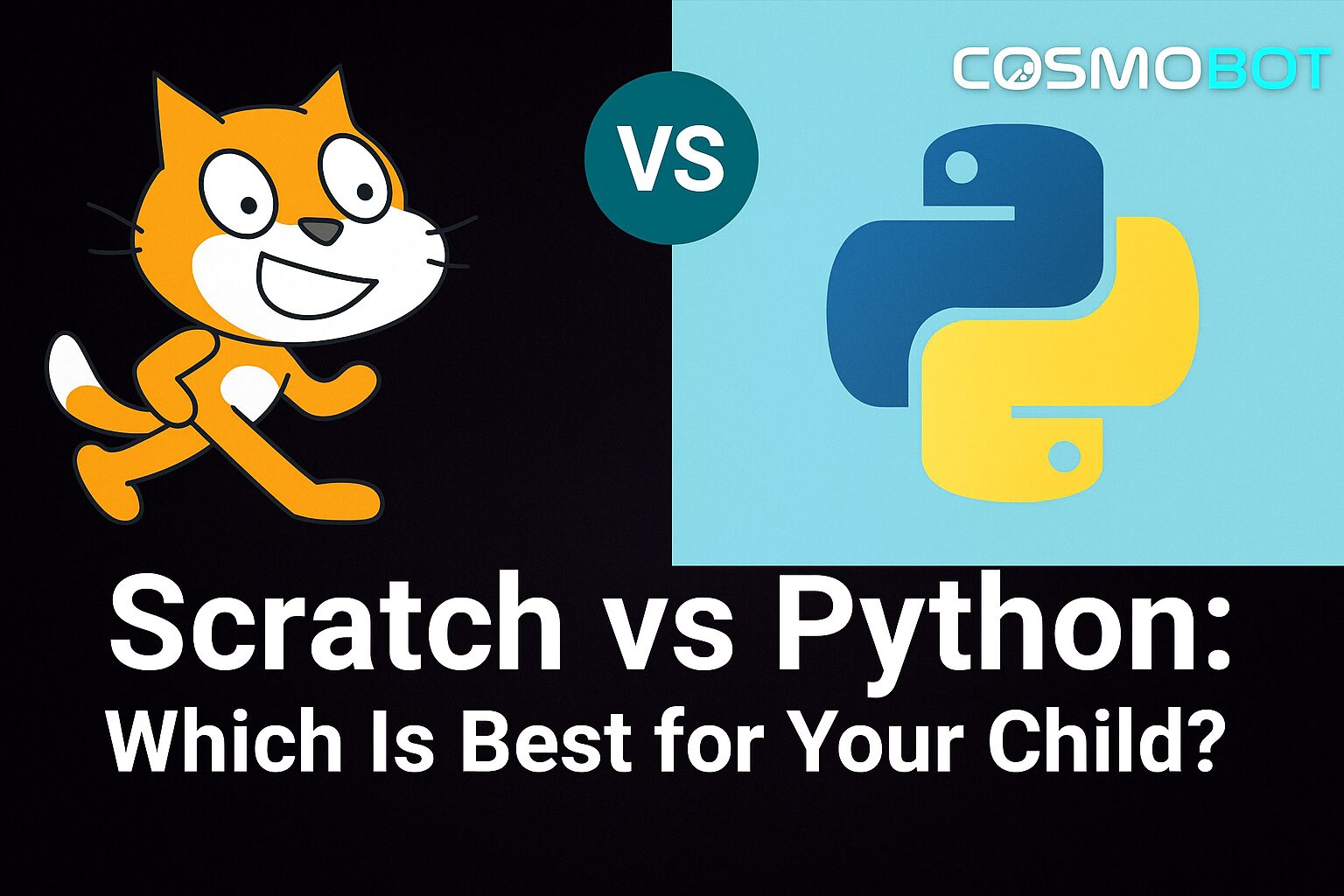
- Block coding
- Python-based programming
- Real-world problem-solving
7.3 Creativity Over Theory
Each class has a mini project—line-following robot, smart light, obstacle-avoiding bot, home automation, and more.
7.4 Expert Mentors
Our certified robotics educators guide every child personally and ensure learning is fun, safe, and engaging.
7.5 Future-Ready Skills
Kids build confidence in:
- Coding
- Electronics
- Mechanics
- AI concepts
- Circuit design
- Automation
Cosmobot helps children become future innovators—not just learners.
8. Real-World Applications of Robotics
Robotics education prepares children for real-life challenges. Robots today are used in:
- Hospitals (surgery & patient monitoring)
- Warehouses (Amazon automation)
- Farms (drones & auto-irrigation)
- Factories (assembly line robots)
- Transportation (self-driving vehicles)
- Homes (smart devices like Alexa & Roomba)
Understanding robotics prepares kids to adapt to a world dominated by automation.
9. Final Thoughts
The future belongs to those who understand how technology works. Robotics is not just a subject—it’s a gateway to hundreds of high-growth careers.
By introducing robotics early, parents give their children a head start in a world driven by innovation, automation, and AI.
At Cosmobot, we empower children with the skills, creativity, and confidence they need to succeed in the future. Robotics unlocks potential, builds strong minds, and prepares young learners for a world full of exciting opportunities.
10.FAQs
Q1. What is the right age for kids to start robotics?
Children as young as 6 years old can start robotics with simple kits and block coding.
Q2. Do kids need prior experience in coding?
No. Beginners start with visual coding and gradually move to advanced robotics.
Q3. Is robotics useful for all career paths?
Yes. Robotics builds problem-solving, creativity, and logical thinking—skills useful in every field.
Q4. How does Cosmobot teach robotics?
Through hands-on activities, coding, real components, and project-based learning led by expert mentors.